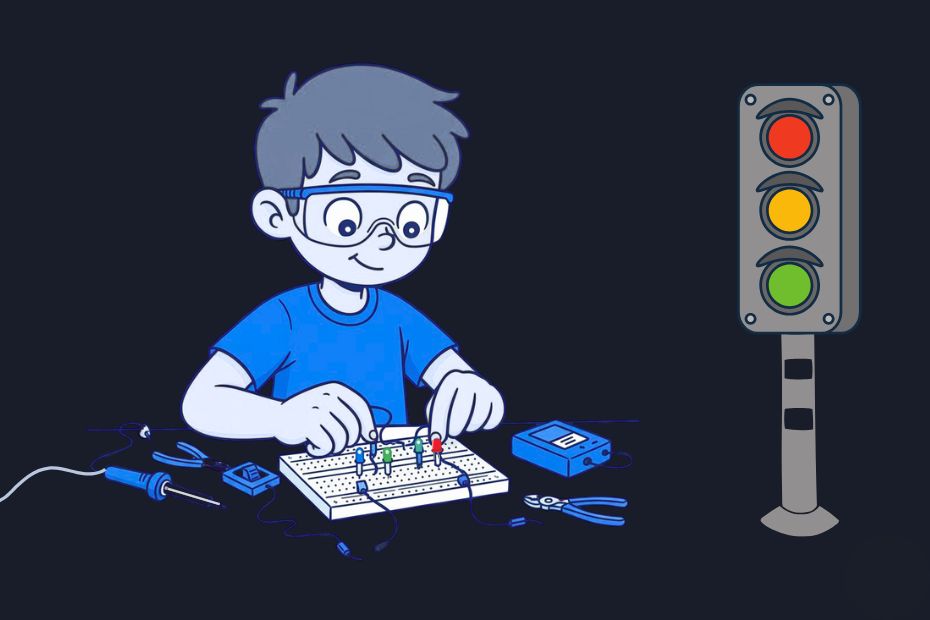
Looking back at these old photographs brings a warm smile to my face. They capture more than just circuits and components, they represent the beginning of a journey that would shape who I am today. What started as simple curiosity in elementary school gradually transformed into a deep, enduring passion for electronics that continues to inspire me.
The Spark That Started It All
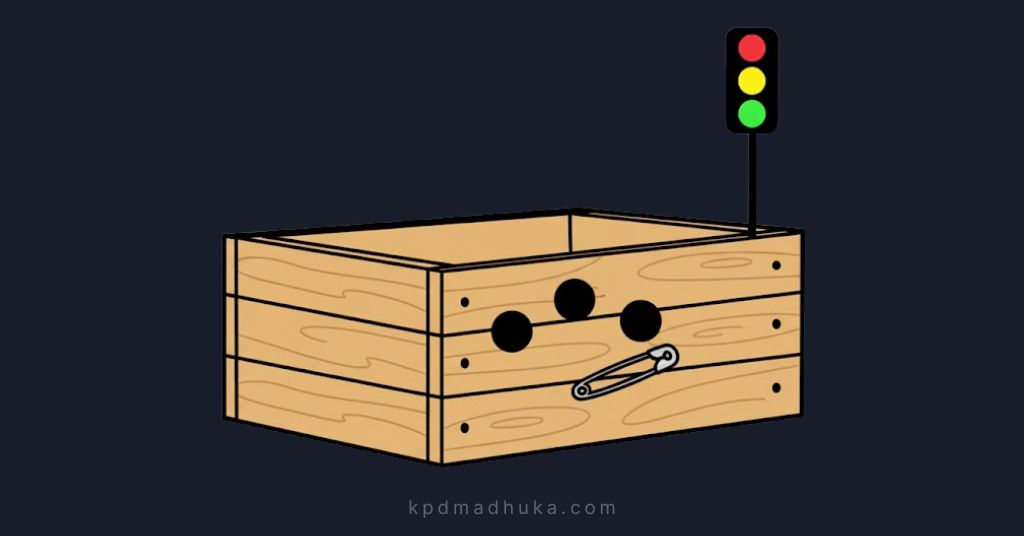
My first electronics experience happened when I was in grade 4 or 5, and it remains one of my most cherished memories. My mother, who was a science teacher, possessed that rare gift of making learning feel like magic rather than work. Together, we built a simple yet fascinating traffic light system using just three LEDs, one movable safety pin, and three drawing pins. The concept was beautifully straightforward, by moving the safety pin to touch different drawing pins, we could control which LED would light up, mimicking the red, yellow, and green sequence of a real traffic signal.
I remember the excitement that coursed through me when that first red LED flickered to life. It was more than just a light turning on; it was the realization that I could create something functional with my own hands, that electricity wasn’t just some mysterious force but something I could understand and control. My mother’s patient guidance and encouragement during those early experiments planted a seed that would grow far beyond what either of us could have imagined.
Taking the Next Big Leap
As I grew older and my understanding deepened, I was ready to tackle something more challenging. The memory of creating my first homemade PCB (Printed Circuit Board) using ferric chloride still fills me with pride. I had discovered a circuit design in the “Punchi Apata Thakshanaya” by Sarath Ananda Alwis, a column of Wijaya magazine, a publication that became my trusted companion and teacher during those formative years. The magazine’s simple yet effective circuit diagrams were perfectly suited for young enthusiasts like myself.
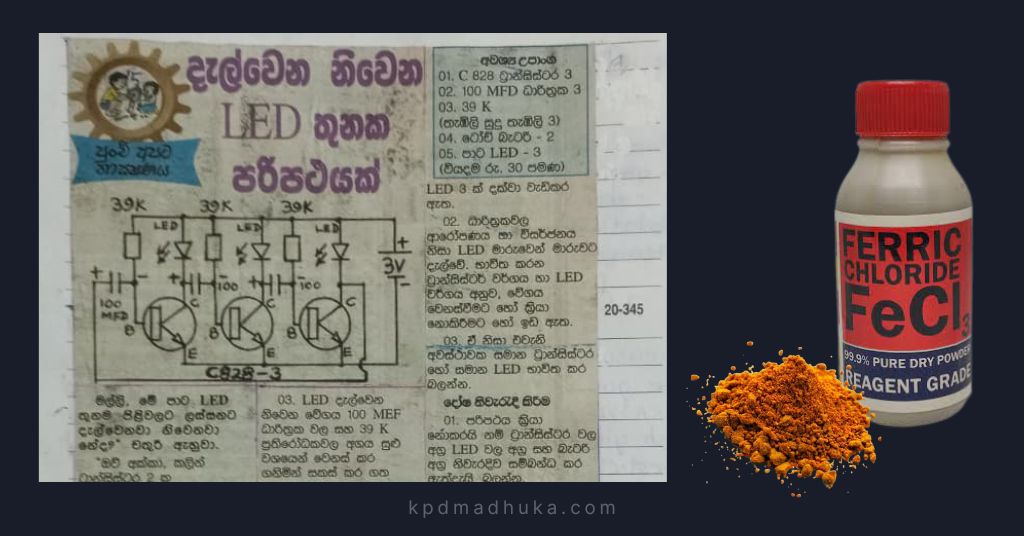
The PCB etching process was delicate and required patience I didn’t know I possessed. I carefully transferred the circuit pattern onto the copper-clad board, then submerged it in the ferric chloride solution, watching with bated breath as the unwanted copper slowly dissolved away. The anxiety of wondering whether my first attempt would work was almost unbearable. When I finally cleaned the board and saw that the circuit traces were perfect, exactly as I had designed them, the sense of accomplishment was indescribable. That success wasn’t just about a working circuit, it represented hours of learning, preparation, and the courage to try something entirely new.
Bringing Light to the Festival
The true test of my growing skills came during Vesak season, one of the most beautiful and meaningful times of the year in our culture. I decided to create a thorana, a decorative lantern display, but with my own electronic twist. Using the circuit I had successfully created on my homemade PCB, I designed and drew my own patterns that would be illuminated by the flashing lights.
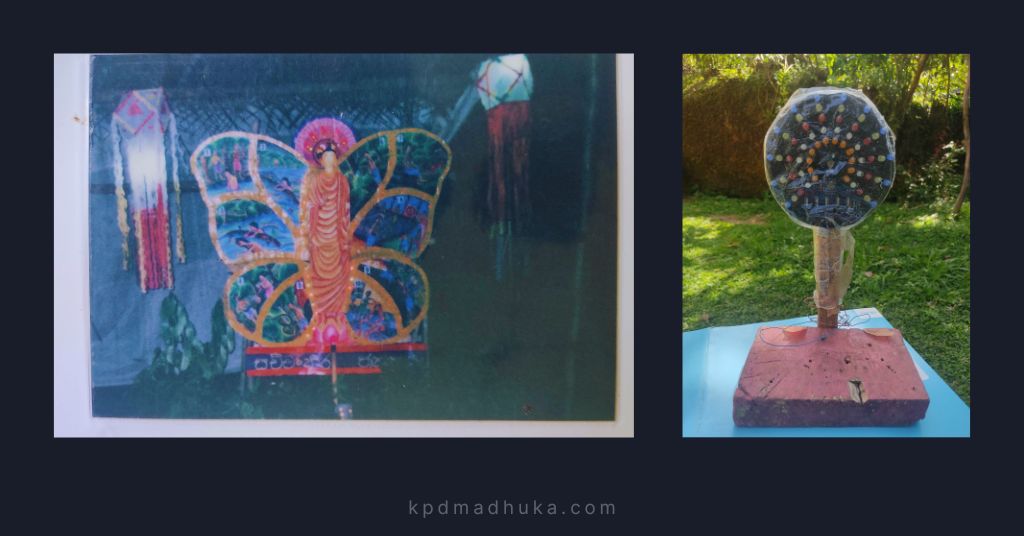
Setting up that thorana was a labor of love. I spent days sketching designs, calculating where to place the LEDs for maximum effect, and testing the circuit repeatedly to ensure it would run flawlessly throughout the festival. When evening fell and I switched it on for the first time, watching my creation come alive with rhythmic, dancing lights, I felt an overwhelming sense of joy. Neighbors and passersby stopped to admire it, and their genuine appreciation made all the effort worthwhile. That thorana represented more than technical skill, it was where my creativity, cultural traditions, and electronics knowledge all came together in perfect harmony.
Adventures in Communication
Perhaps the most exciting project of my childhood was building a radio transmitter and receiver circuit that allowed me to communicate with my little brothers during our home games. We transformed our house into an adventure playground, with different rooms becoming secret bases, and the radio system made our imaginative games feel incredibly real.
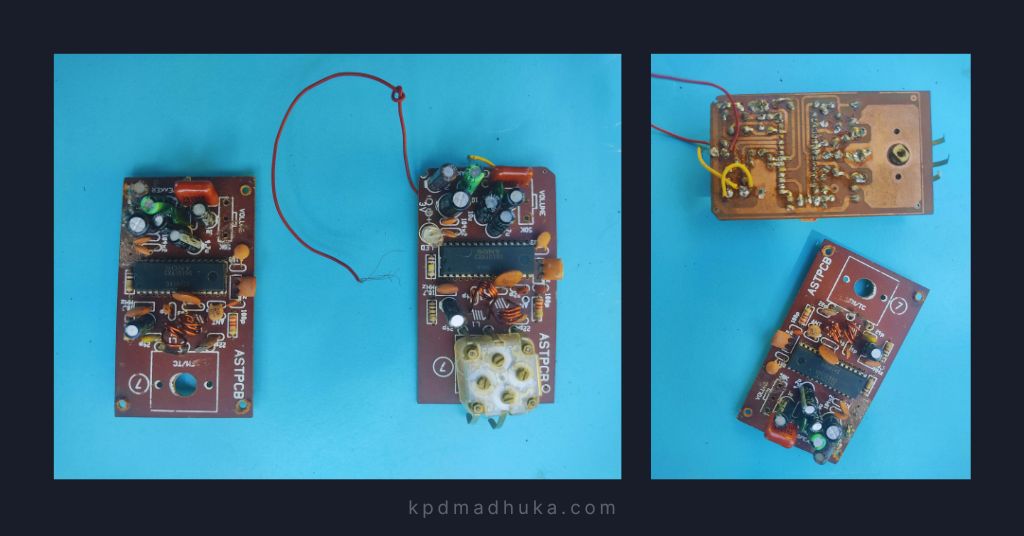
I can still recall the thrill of hearing my brother’s voice crackle through the homemade receiver for the first time. We had created our own communication network, just like the characters in the adventure stories we loved. The system wasn’t perfect,l the range was limited, there was plenty of static, and sometimes we’d accidentally pick up snippets of other nearby radio signals, but those imperfections only added to the excitement. We spent countless hours playing spies, explorers, and adventurers, coordinating our “missions” through those handmade radios. Those weren’t just electronics projects; they were portals to endless imagination and bonding experiences that strengthened our brotherhood.
Practical Innovation in Grade 9
By the time I reached grade 9, my skills had evolved significantly, and I was ready to create something genuinely useful for our household. I designed and built an automated night light that would turn on automatically when darkness fell and switch off with the arrival of dawn. The circuit used a light-dependent resistor (LDR) as a sensor, which would detect the ambient light level and trigger the switching mechanism accordingly.
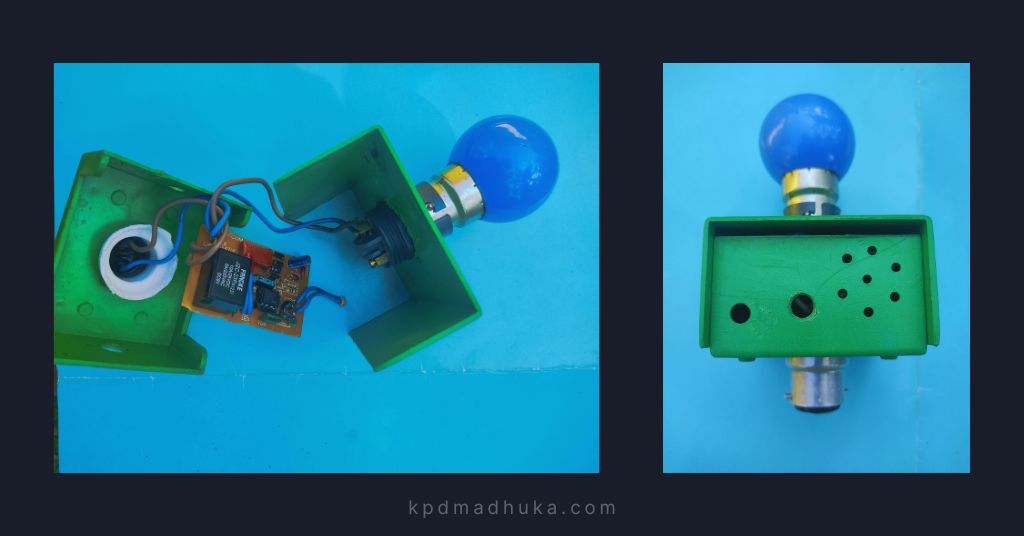
This project represented a milestone in my journey because it wasn’t just about learning, it was about applying my knowledge to solve a real, everyday problem. My family no longer had to remember to turn on the porch light every evening or waste electricity by leaving it on during the day. The automated night light worked reliably, night after night, and seeing my parents’ appreciation for this practical creation gave me a new perspective on the value of electronics. It taught me that the best inventions aren’t always the most complex; sometimes, they’re simply solutions that make life a little bit easier.
The Passion That Never Faded
These early experiences, from that simple traffic light system to the automated night light, laid the foundation for a lifelong passion. Each project taught me something valuable: patience from waiting for the ferric chloride to etch my PCBs, creativity from designing thorana displays, problem-solving from debugging circuits that didn’t work the first time, and perseverance from the many experiments that failed before they succeeded.
What began as a childhood hobby has become an integral part of who I am. The curiosity that made me wonder “how does this work?” and the excitement of creating something new with my own hands never diminished, it only grew stronger. Every blinking LED, every successfully etched circuit board, and every moment when a project finally worked as intended reinforced my love for electronics.
Today, when I work with circuits and electronic systems, I’m not just connecting components, I’m connecting with that young boy who once marveled at making three LEDs light up in sequence. That sense of wonder, that spark of curiosity, remains as bright as ever. And I’m grateful that my mother’s encouragement and those early hands-on experiences showed me that the most rewarding path in life is often the one that follows your passion, no matter where it might lead.
What childhood hobby shaped your life? I’d love to hear your stories in the comments below. 😍